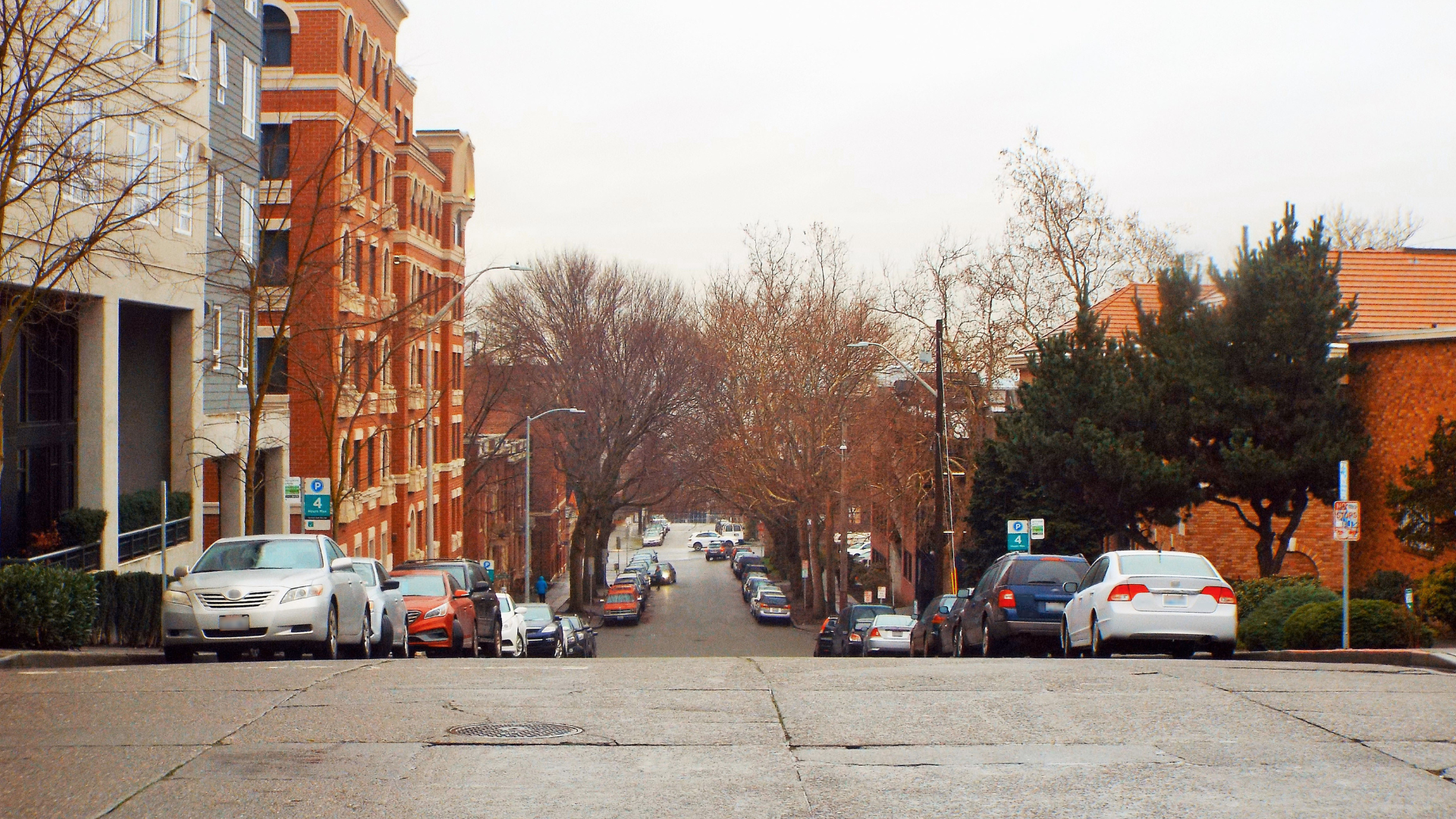
Nearly half of King County’s unhoused population lives in their vehicles.
Vehicle Resident Legality and Parking Tickets
Living in your vehicle is not illegal in Washington, but there are parking laws to follow, such as time limits and restrictions on oversized vehicles in certain areas. Some municipalities may also have their own ordinances regarding vehicle residency.
While living in a vehicle in Seattle is not explicitly illegal, it’s crucial to be aware of parking regulations and potential restrictions, especially regarding vehicle size and duration of parking.
- Time Limits: In Seattle, if there are no posted time limits, paid parking, or other restrictions, the 72-hour parking limit applies. Click here to learn more.
- Oversized Vehicle Restrictions: Vehicles over 80 inches wide (like many RVs) are restricted from parking between midnight and 6:00 am except in industrial areas.
If you live in your vehicle and have parking tickets, learn what to do in the Guide for People Living in Vehicles also called the RED BOOK.
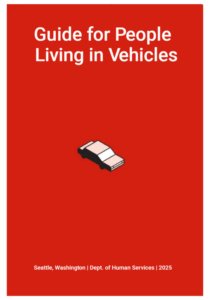
Click the graphic above to access a digital booklet of the RED BOOK, or the button below to access a downloadable PDF.
Outreach Teams
The City of Seattle has outreach teams that are dedicated to helping vehicle residents. To get help, please call Seattle Human Services Department at (206) 600-8486 or (206) 507-9428. Please state where you are parked. An outreach team in your neighborhood will assist you.
- The Vehicle Resident Outreach (VRO) team works out of UHeights and supports Vehicle residents in City Council Districts 1, 2, 4, 5 and 6
- The Salvation Army Outreach Team supports Vehicle residents in City Council Districts 3 and 7
Click here to find your district.
Safe Parking Programs
There are safe parking programs in King County that can provide a secure place to park, access to restrooms, and potentially other services like case management. These safe parking programs are for cars, not RVs.
- Overlake Christian Church:
- Offers a Safe Parking ministry with a designated lot for up to 15 single men and couples, providing access to showers, meals, and connections to case managers, according to Overlake Christian Church.
- Lake Washington United Methodist Church (LWUMC):
- Provides a safe place for women and families living in their vehicles, with a focus on creating a sense of community and offering support, according to Lake Washington United Methodist Church.
- Catholic Community Services of Western Washington (CCS/CHS):
- Operates a Safe Parking program at St. John the Baptist, offering a secure location, access to showers and bathrooms, and connections to resources for permanent housing, according to Catholic Community Services of Western Washington.
- Urban League of Metropolitan Seattle:
- Provides safe parking programs for those staying overnight in their vehicles, with lots located in north, west, and central Seattle.
- Newport Presbyterian Church:
- Offers a 24-hour Safe Parking program with 8 spaces, Wi-Fi access, and a portable toilet, according to Newport Presbyterian Church.
Local Resources for Vehicle Residents
UHeights Vehicle Resident Programs
Vehicle Resident Outreach (VRO) supports people who live in their vehicles meeting clients in the field and pop-up locations such as the North end Ballard food bank (serving district 4, 5 and 6) on Mondays 12:30 to 3:30 excluding holidays and food bank closures, and the Northwest SODO community market at 1915 4th Ave S from 9AM and 12PM on Fridays. VRO provides services that include vehicle repairs, basic needs supplies, housing navigation, connection to other community services, and ultimately, a pathway to stable housing.
Do you live in an RV in Seattle and need help with your wastewater?
If so, please call or text the City of Seattle RV Wastewater Team at (206) 641-6991. They can come and do a pump out. Sewage stored in RV blackwater and greywater tanks can spill or leak without proper storage and disposal. The Wastewater Team are in different parts of the city each week; see the service areas on the map on the website.
Hygiene Centers
- Urban Rest Stops
- Locations in Downtown Seattle and Ballard – Google Maps
- Free showers, restrooms, and laundry
- Seattle Parks and Recreation
- Free showers at the following community centers: Delridge, Meadowbrook, Green Lake, Rainier, Miller
- Chief Seattle Club – Google Maps
- For American Indians and Alaska Natives
Mobile shower trailers
- Seattle Public Utilities Mobile Shower Trailers
- Trailers with shower stalls, toilets, sinks, and hygiene items.
- Located in South Seattle/Mt. Baker and Queen Anne/Uptown
National Resources for Vehicle Residents
The National Vehicle Residency Collective
The National Vehicle Residency Collective (“NVRC”) is a network of vehicle residents, social service providers, and legal experts joining together to support people living in their vehicles. Our goal is to honor and value the voices of vehicle residents, support their policy and service goals, and protect their legal rights. We believe that a key component of this work is to raise positive public awareness about people living in vehicles and vehicle residency.