As 2025 comes to a close, we’re reflecting on both the scale of homelessness in King County and how the regional homelessness response system is performing under sustained pressure.
Each year, tens of thousands of people experience homelessness across the region, with about 18,000 people entering homelessness annually through our shared Homeless Management Information System (HMIS). And yet, year over year, the net increase in unsheltered homelessness is closer to 1,500 people. That gap matters: it reflects thousands of people each year whose homelessness is prevented, resolved, or shortened through coordinated shelter, services, and housing pathways.
This does not mean the crisis is solved. It means the system is working every day to prevent homelessness from growing far worse — while continuing to push for faster exits from homelessness to housing, better health and safety outcomes, and greater equity.
In our fourth full year of operations, KCRHA focused on strengthening the foundations of a unified regional response: improving system coordination, stabilizing provider operations, strengthening emergency readiness, and supporting clearer regional alignment.
Coordinated Entry: Connecting People to the Right Path Faster
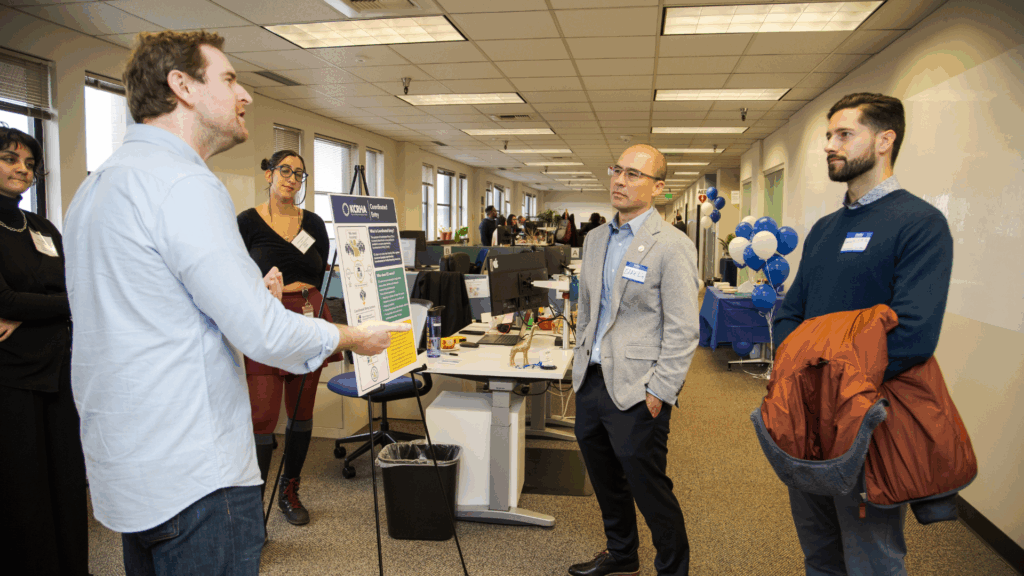
Throughout 2025, KCRHA continued strengthening the Coordinated Entry system, the shared front door to housing resources across King County. Coordinated Entry ensures people experiencing homelessness are assessed consistently, prioritized based on need, and matched appropriate housing and services — regardless of where they seek help.
Recent work focused on improving alignment between outreach teams, shelters, and housing providers; reducing delays between assessment and referral; and using systemwide data to identify bottlenecks that leave people waiting outdoors longer than necessary.
Keeping People Safe During Severe Weather
This year, KCRHA strengthened regional severe weather response by launching a standing Request for Qualifications (RFQ) to pre-identify agencies capable of rapidly activating emergency shelter and support services. This approach allows funding to move faster when weather conditions become dangerous.
Through partnership with local elected officials and providers including Lake City Partners, Low Income Housing Institute, Salvation Army, and Urban League, four seasonal shelters opened in Seattle late in the year, adding more than 100 beds per night across four neighborhoods.
Enhancing our East King County Partnership
In July KCRHA entered into a new agreement with the City of Bellevue and the City of Redmond to administer severe weather funding in East King County. The agreement leverages additional funding and builds on the existing relationship we have with a coalition of North King County Cities — Bothell, Kenmore, Lake Forest Park, Shoreline, and Woodinville. We are proud that KCRHA’s leadership in severe weather emergency response is being recognized as a valuable improvement to our emergency homelessness system. We look forward to working with more cities in the coming months and further unifying the regional homelessness response.
Financial Efficiency and Transparency
Reliable operations matter — especially for providers doing frontline work. By the end of January 2025, KCRHA completed 98% of nearly 170 contract renewals, a significant improvement from past years. We also transitioned from Fluxx to Salesforce for grants management, creating a smoother invoicing process for contracted providers.
Through Salesforce, providers can generate reports, track spending, and experience a more streamlined Request for Proposals (RFP) process. We made this change in direct response to provider feedback, with the goal of reducing administrative burden and increasing transparency. Ensuring our provider partners are paid promptly and have high functioning administrative support is a key factor in helping them to their work in delivering the services within the homelessness response system.
Data and Transparency as System Infrastructure
We continued strengthening the use of shared data across the regional homelessness response system. The Homeless Management Information System (HMIS) and related system-level analysis are used not just for reporting, but to identify where people are getting stuck — whether in outreach, shelter access, referrals, or housing placement — and to adjust practices accordingly.
This work focuses on improving flow through the system, shortening time spent unsheltered, and using limited resources more effectively, rather than creating parallel or duplicative programs.
Simplifying Governance
This was the first year for the new KCRHA Governing Board (GB) structure. This structure was developed by our funders and elected officials to streamline the Authority, decision making, and accountability in the homelessness response system. In 2026, we’ll continue to build on our previous successes, grow partnerships, and address unsheltered homelessness in King County.
Looking Ahead
The scale of homelessness in King County remains larger than any single agency can solve alone. But progress depends on a system that works — one that prevents homelessness where possible, resolves it faster when it occurs, and coordinates with partners across the region.
In 2026, KCRHA will continue strengthening these foundations while advancing strategies to reduce unsheltered homelessness and improve outcomes for people across King County.